New year, new blog style! You may notice a change in this blog: I’m moving away from posts with minimal text to more in-depth posts that highlight both student work and the learning behind it. These posts will give more context to the projects explaining the thought process, skills, and growth happening in my art classes. The goal is to provide a fuller picture of what my students are accomplishing while also documenting the teaching strategies and artistic experiences that make my program unique! Here we go:
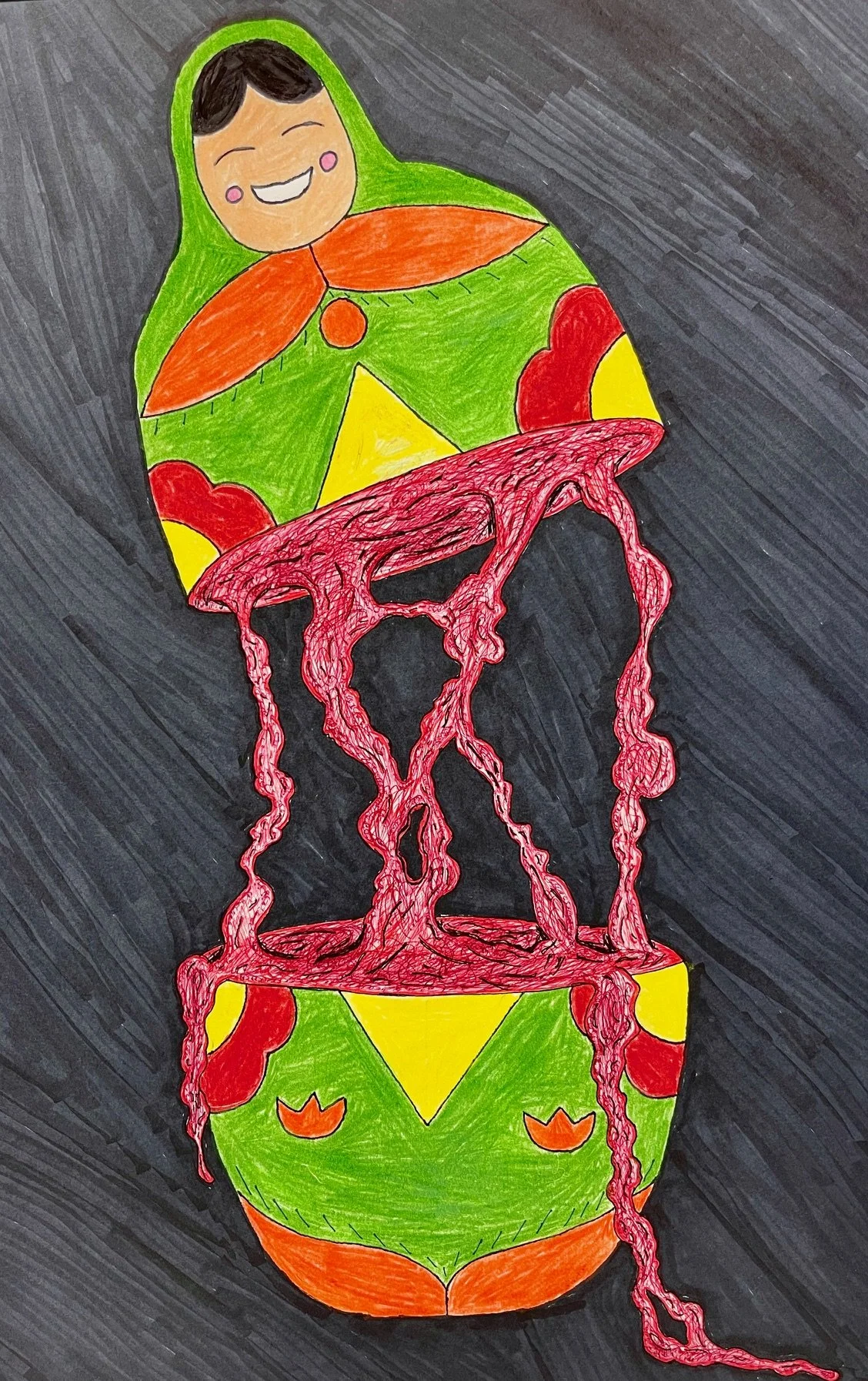
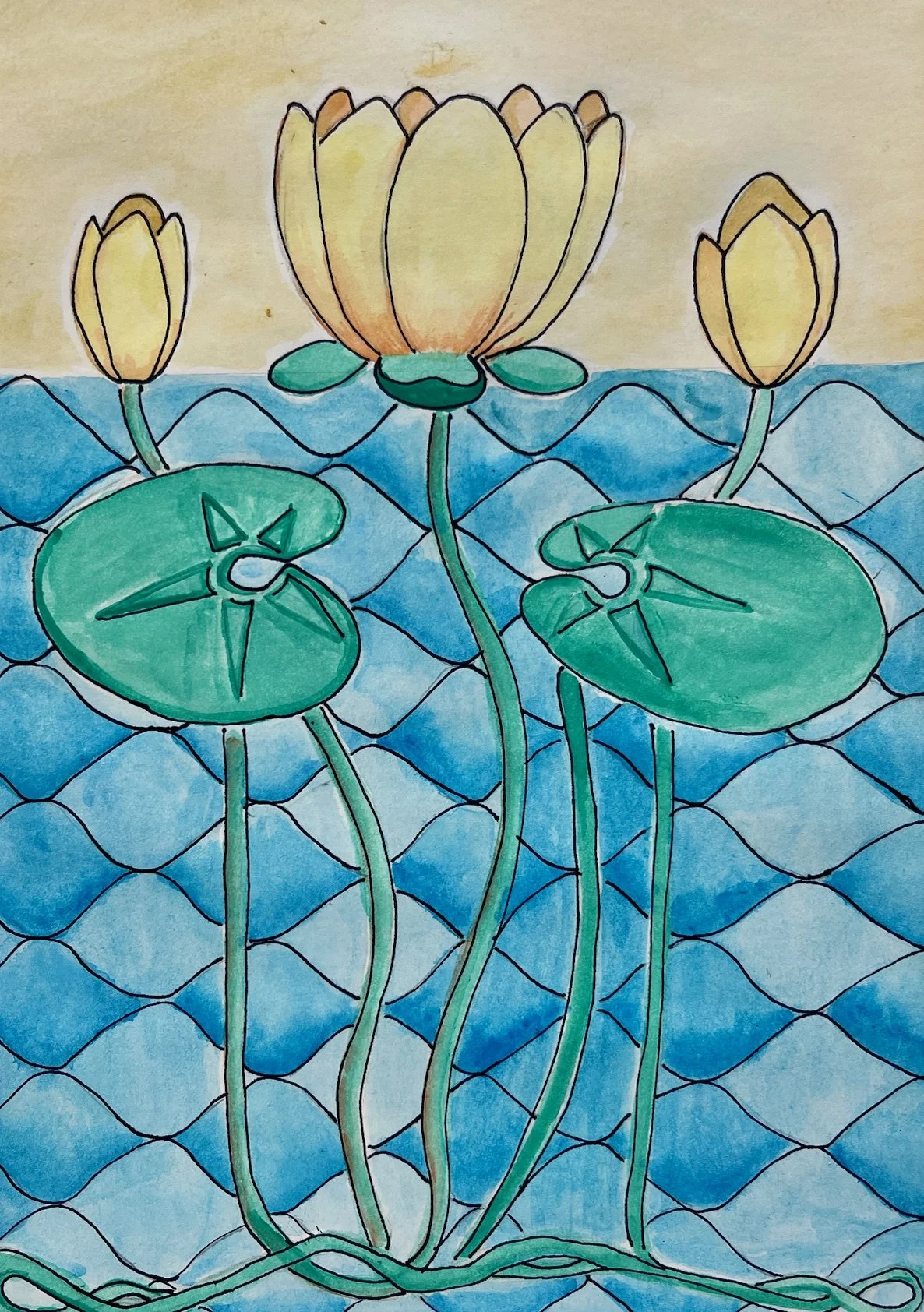
The Advanced Art students completed a project titled “Revealed Layers,” in which they combined colored pencils and markers. This assignment encouraged students to experiment with multiple drawing media while expressing their ideas about what lies beneath the surface.
Students chose subjects that allowed them to reveal hidden layers either literally, metaphorically, or both. Some explored their personal memories and identities through symbolism, some took a literal approach showing something being revealed, and others literally revealed layers by employing collage techniques to create actual depth.
Through this project, students not only developed their technical skills like mixing media, layering color, and building depth, but also strengthened their artistic voice, making deliberate choices about composition, narrative, and concept. The combination of colored pencils and markers allowed them to balance fine detail with bold, expressive areas of color.
“Revealed Layers” is an excellent example of how advanced students move beyond technical exercises into projects that challenge them to communicate ideas, evoke emotion, and showcase their unique creative perspectives. I’m proud of the thoughtfulness, risk-taking, and skill each student brought to this project.