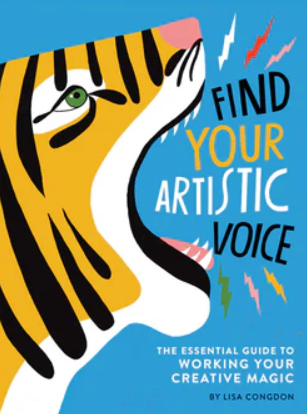
Find Your Artistic Voice by Lisa Congdon

One of the biggest things I want my Advanced Art students to walk away with beyond excellent technical skills is a sense of who they are as artists. That’s not an easy thing to figure out for adult artists, let alone high school students. That’s where Lisa Congdon’s Find Your Artistic Voice comes in.

I love this book because it makes the idea of “voice” in art feel approachable. Congdon makes it clear that artistic voice isn’t some magical gift you’re either born with or not. Instead it’s something you develop over time by trying things, messing up, experimenting, reflecting, and noticing what sticks with you.

Another reason I wanted this book in my classroom is because it connects us to the real, contemporary art world. Congdon shares stories from working artists, and students get to see that even professionals struggle with doubt, influence, and originality. They didn’t just wake up one day with a fully formed style. They worked through the same questions my students are asking in my classroom right now.

Ultimately, I chose this book because it gives us a shared language in the studio. We can talk not just about how to make art, but why, and that’s the real leap I want my students to make.
From Technique to Voice with Advanced Art

The Advanced Art students just wrapped up a project inspired by the word Happiness. Their challenge was to translate that theme into an art piece using their unique artistic voice, while also creating depth and dimension through shading with either pencil or colored pencil.

Unlike my introductory classes, where we focus heavily on the technical building blocks of drawing, this course leans more into style development and finding an artistic voice. We still practice fundamentals like value studies and shading to show depth, but the real emphasis is on how each artist uses those tools in their own unique way.

To support that process, this semester we’ve been reading Find Your Artistic Voice by Lisa Congdon. Her message that every artist has a voice worth developing is a touchstone for our class.

The “Happiness” projects reflect that beautifully. Some students leaned into bright, playful imagery that feels almost like a panel out of a manga or comic book, while others approached it with quiet, subtle symbolism. Every piece reveals a different interpretation of what joy looks like and showcases each student’s growing confidence in their personal style.

For me as a teacher, it’s inspiring to see students move beyond “how do I draw this?” into “how do I say something with my art?”

Beginning the School Year with Art 1

One of the most exciting parts of teaching high school art is watching students take the skills we’ve practiced in small studies and apply them to a major project. My students completed their first big assignment of the semester: one-point linear perspective drawings. Understanding linear perspective not only makes drawings more realistic, but it also helps young artists think critically about space, depth, and composition.

Before beginning this project, we spent time doing drawing activities and studies to learn some of the building blocks of drawing: contour lines and line weight, proportion, shading to show form, and linear perspective. In this project, students combined those skills along with other depth cues like overlapping, size variation, and placement on the page to create spaces with a sense of realistic depth.

I love how this assignment gives students both structure and freedom: structure in the rules of perspective and basic drawing techniques, and freedom in the way they design their imaginary spaces. You can see their individual styles peek through.

I see perspective drawing as more than just a technical exercise. It’s a way to teach problem solving and build artistic confidence. My students will carry forward all of these important skills into every creative challenge this school year and beyond. I’m proud of their hard work, and I can’t wait to see how they apply these foundations in our upcoming projects.

Alumni Success: Morgan Granzow

Bridgman 2021 graduate is completing her BFA at the University of Michigan! Morgan Granzow (BFA ’25) has transformed her passion for art and science into a powerful body of work that bridges anatomy, identity, and perception. Drawing from her personal experience with hearing loss, her senior project combines oil painting and sculpture to explore the beauty and complexity of the human body, challenging traditional ideas of what is considered “beautiful.”

Through a process rooted in research, experimentation, and scientific illustration, Morgan’s work invites viewers to look beneath the surface and reconsider their reactions to the body, whether fascination, discomfort, or awe. Her time at Bridgman High School and then the University of Michigan Stamps School of Art & Design helped shape her voice as both an artist and aspiring scientific illustrator, positioning her for a future that connects art, medicine, and education.

Art Education - Careers in Art

In my Art Education course, as often as possible, I ask my students to design lessons and actually teach them. I think this is the best way for students to see the successes and especially the flaws of their lessons. For the most recent project, I asked students to design a lesson related to careers in art and then teach it to a real child.

Learning about art careers is a great starting point for an art lesson, helping young students picture future possibilities and connect art to something tangible. The trick is taking a project that someone might create as an illustrator, animator, designer, etc. and turning it into something engaging and age-appropriate.

This assignment builds on my Art Education students’ ability to lesson plan with consideration for Lowenfeld’s stages of artistic development as well as the Michigan State Visual Arts Standards to help develop age appropriate lessons.

Teaching a real child changes everything. As my Art Education students discovered, even well-planned lessons do not always go as expected, requiring them to adapt in the moment. Teaching for the first time involves making mistakes and learning from them. Afterward, students reflected on what worked and what they would change. These reflections were the most valuable part of the project and will help my students grow into better educators.

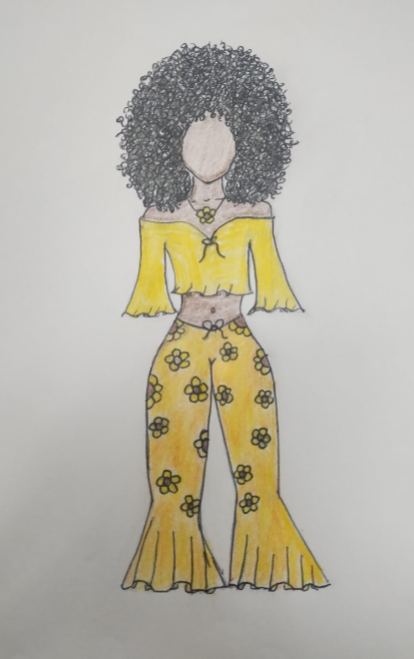
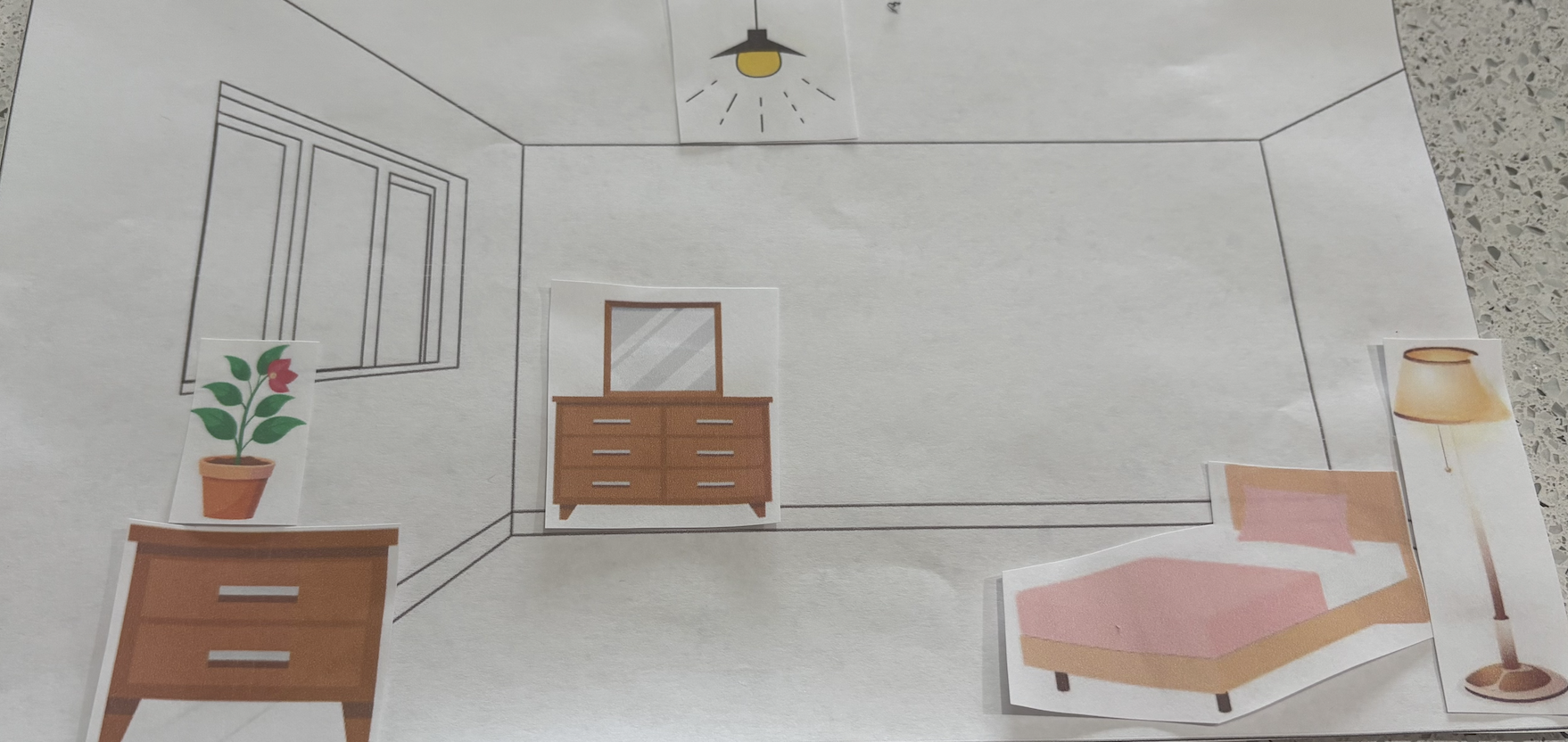
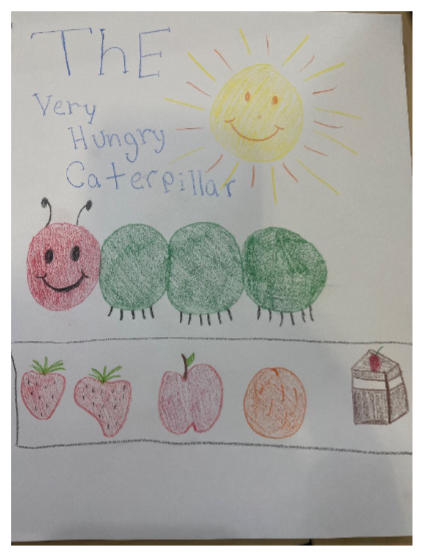
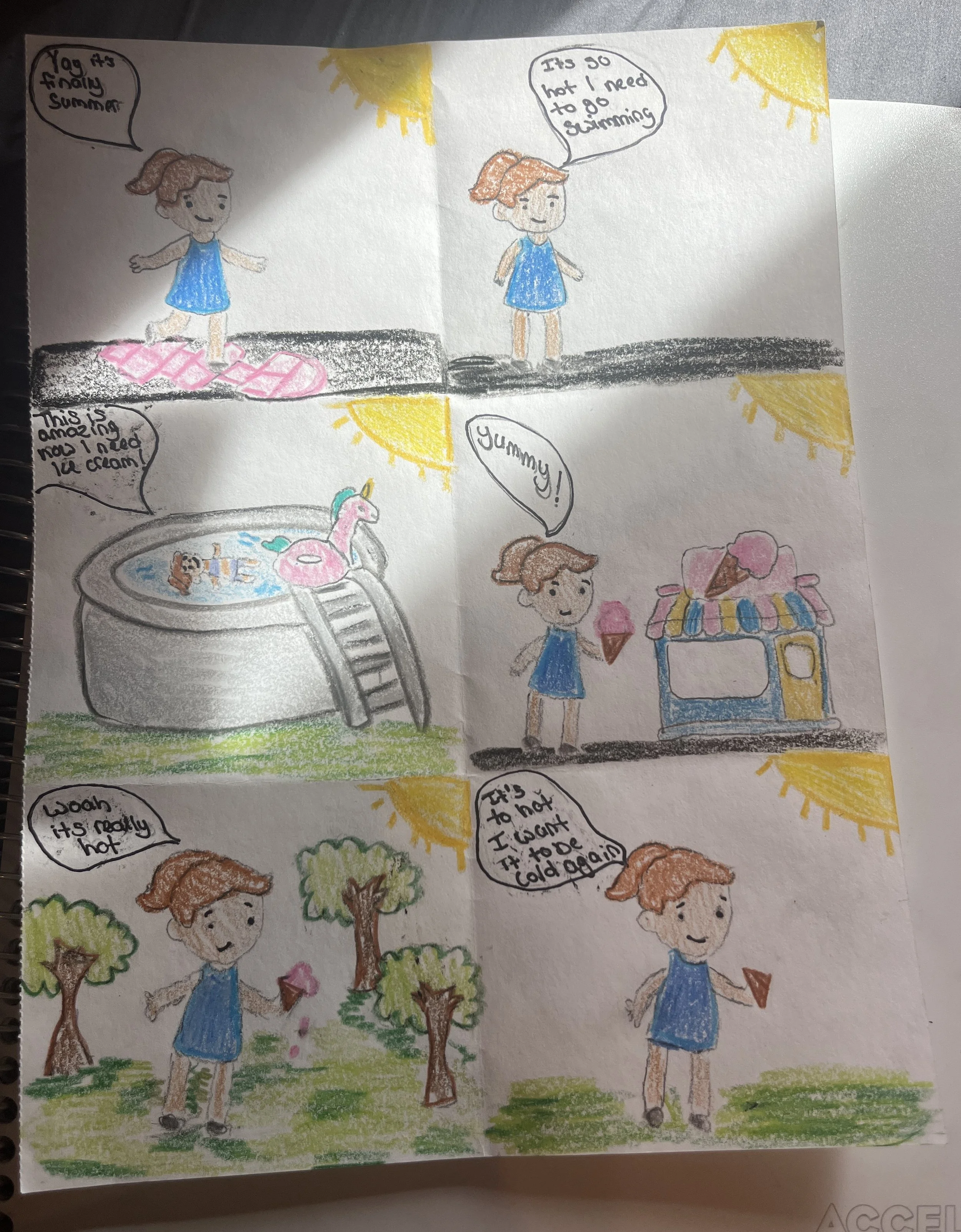
Below are a few examples created by the kids that my Art Education students taught. Lessons taught about Fashion Design, Interior Design, and Illustration.